In this article, pianist and music educator Siliana Chiliachka explores how children learn to truly think in music. Drawing on the concept of audiation, she considers how listening, singing, movement, and improvisation lay the foundation for reading music, while offering practical ways parents can cultivate deeper musical understanding at home.
For many years, I assumed that musical understanding would naturally grow from learning to read music well and understand music theory. After all, that had largely been my own experience. As a classical pianist, I was fortunate to receive an excellent musical education from an early age. Music came naturally to me, and I progressed rapidly as a young pianist. My teachers nurtured both my technical and artistic development, and their guidance shaped me into the musician I became.
When I began teaching, I hoped to offer my students the same rich musical education I had received. Yet the longer I taught, the more I found myself examining my own musicianship. Although I had spent years studying and performing classical piano repertoire, I realized there were important musical skills I had never truly developed. I couldn’t improvise. Learning by ear didn’t come naturally to me, and I forgot pieces if I didn’t practice them for a long time. I began to wonder why these abilities had remained largely unexplored despite years of serious musical training. Those questions eventually led me to ask a more fundamental one:
How do children come to understand music?
The answer to that question shapes what we teach, when we teach it, and how we teach it. To explore it, it helps to step outside music for a moment.
We would never expect a child to read a book in a language they have never spoken. Before written words can carry meaning, children first need years of listening, speaking, and understanding. Yet in music education, we often reverse this sequence. Children are frequently introduced to music notation before they have developed a rich foundation of listening, singing, moving, and thinking musically. We ask them to make sense of symbols before they have learned to think in music. But can notation create musical understanding?
Thinking in Music: Understanding Audiation
We all know what it means to think in words. We can silently read and understand a sentence without speaking it aloud. When we are listening to someone speak on a familiar subject, we can anticipate what they will say…next. We can choose our words before we speak them. These mental processes allow us to understand language even in silence.
Dr. Edwin Gordon proposed that musicians develop a comparable capacity: the ability to think in music. He called this process Audiation – the ability to hear and understand music in the mind, even when no physical sound is present. More than simply imagining sounds, audiation is the process by which music becomes meaningful. It enables us to organize what we hear, recognize relationships, anticipate what is likely to come next, and make sense of music as it unfolds.
Audiation is what allows musicians to hear a melody inwardly before singing it, to recognize familiar tonal and rhythmic patterns across a piece, to anticipate a harmonic progression, or to understand a phrase well enough to shape it expressively. It underpins our ability to improvise, compose, memorize music over the long term, and make thoughtful musical decisions, without always depending on someone else to tell us what is “correct”.
There are many different aspects of music we can audiate. When a familiar recording stops, and we can continue the melody in our minds, we are audiating melodically. When a musician looks at a score and can internally hear the music before playing a single note, they are experiencing notational audiation. When a child recognizes that two seemingly different songs share the same underlying harmonic pattern, they are audiating harmonically (Mary Had a Little Lamb and Itsy-Bitsy Spider )
Although Gordon’s research explored many aspects of musical thinking/audiating, he placed particular emphasis on tonal and rhythmic audiation. These are not advanced skills reserved for accomplished musicians. They form part of the foundation upon which musicianship is built.
This helps explain why two students with similar music reading abilities can experience very different levels of musical understanding. One may reproduce the notes accurately while relying primarily on visual cues. Another hears relationships, anticipates patterns, and understands the music from within (audiates). Audiation allows notation to represent sounds rather than symbols, music theory to describe relationships rather than simply define “rules,” and performance to become an expression of musical understanding rather than the reproduction of written instructions.
Children do not become musical by memorizing symbols. They become musical through rich musical experiences that gradually develop their capacity to think in music.
This is not an argument against learning to read music or study music theory. Rather, it invites us to consider when and how these forms of knowledge enter the learning process. When introduced at the right time, notation and theory become powerful tools for describing and communicating musical understanding rather than trying to create it.
When Symbols Become Meaningful
If musical understanding develops through audiation, where does notation fit into that process?
Just as a recipe is not the meal, notation is not the music.
Notation is a representation of musical sound and musical thought—not a substitute for either. It captures musical ideas in visual form, allowing them to be preserved, shared, and revisited. But the symbols themselves do not contain musical understanding. Their meaning depends on the understanding that musicians bring to the score.
This distinction is easy to overlook because notation is so deeply woven into formal music education. We often encounter written music before we have considered what the symbols are meant to represent. Children can certainly learn to identify notes, rhythms, intervals, key signatures, dynamics, and articulations. They can learn where to place their fingers and how to decode increasingly complex scores. But decoding notation—and even learning music theory—are not the same as musical understanding.
This helps explain why two students can read the same score and experience it very differently. One sees notes to decode, isolated intervals, and “hand positions”; another hears phrases, harmonic motion, tonal relationships, and expressive possibilities. These differences become evident in many aspects of music making. A child may perform every note accurately yet struggle to sing the melody away from the instrument. Another may read fluently while failing to recognize that two different pieces share the same underlying harmonic pattern. A third may rely so completely on the printed page that performing from memory becomes an exercise in recalling visual images rather than musical relationships.
These are not failures of notation. They are reminders that notation was never intended to carry the entire burden of music learning.
A Tradition Richer Than Notation Alone
At this point, some readers may wonder whether emphasizing listening, singing, movement, improvisation, and audiation represents a departure from the classical tradition.
In many respects, the opposite is true.
For much of Western music history, learning to read notation was only one part of becoming a musician. Musical understanding was cultivated through a much broader range of experiences that included listening, singing, imitation, memorization, improvisation, accompaniment, composition, and performance. Notation was indispensable, but it was not expected to create musical understanding on its own.
Long before conservatories took their modern form, singers learned sacred chant primarily by listening, imitating, and singing alongside more experienced musicians. During the Middle Ages and the Renaissance, improvising additional voices over an existing melody formed an important part of a musician’s education. These traditions expected musicians to think actively in sound rather than simply reproduce what appeared on a page.
By the eighteenth century, many Italian conservatories had developed pedagogical approaches that integrated performance, composition, improvisation, and theory from the earliest stages of training. Students worked with partimenti—bass lines that served as frameworks for realizing harmony, creating complete musical textures, and eventually composing their own music. Rather than separating theory from practice, these exercises helped students internalize musical patterns, recognize harmonic relationships, and develop fluency through active music making.
The great composers we admire today were formed within this broader musical culture. Johann Sebastian Bach was renowned as an improviser, particularly at the organ. Mozart astonished audiences with his seemingly spontaneous improvisations at the keyboard, often creating elaborate fantasies and cadenzas on the spot. Beethoven first established his reputation in Vienna not only through his compositions but through his extraordinary improvisations. Their education demanded far more than the accurate reproduction of written scores – it expected musicians to hear, remember, manipulate, and create musical ideas with fluency.
This is not to suggest that there was a single historical method of teaching music, nor that every musician was trained in the same way. The traditions of medieval choirs, Italian conservatories, and nineteenth-century conservatories differed considerably. Yet across much of Western music history, a common thread emerges: notation existed alongside rich musical experiences that developed the ear, the mind, and the imagination.
Seen in this light, audiation is not a rejection of the classical tradition. Rather, it offers a way of describing a process that many of its finest musicians appear to have understood intuitively: before notation can become truly meaningful, it must represent music that already has meaning.
Cultivating Musical Understanding at Home
Children do not become musicians only through lessons. They become musicians by living in a musical world. One of music’s greatest gifts is that it doesn’t belong only in the lesson studio or the concert hall. It flourishes in everyday family life. The goal is not simply to surround children with music, but to invite them to participate in it. Parents don’t need to be professional musicians to create rich musical experiences at home. Here are a few simple ways to begin:
- Singing to your child and singing together is one of the most powerful ways to support musical development. Whether through folk tunes, hymns, nursery rhymes, or favorite family songs, singing helps children internalize tonal relationships, develop a sense of rhythm, and experience music as something they actively participate in rather than simply consume. The goal is the shared experience of making music together.
- Movement is equally important. Before children can analyze rhythm, they learn to feel it. Walking, swaying, rocking, skipping, bouncing, or moving freely to music helps connect listening with the body. These experiences deepen musical understanding in ways that cannot be achieved through explanation alone.
- Listening deserves just as much attention as performing. Fill your home with a rich variety of music. Return often to pieces your children come to love, but also introduce unfamiliar styles, composers, and cultures. As you listen together, wonder aloud. Does this melody remind you of another one? Can you hear something repeating? How has the music changed? Questions like these invite children to listen attentively without turning music into a test. If you would like more guidance, Classical Encounters’ listening guides provide activities for all the ages in your home that facilitate active listening — sharpening ears, awakening imagination, and growing your children’s ability to deeply inhabit the musical language.
- Finally, leave room for musical play. Encourage children to invent melodies, answer one musical phrase with another, explore the sounds of an instrument, or make up their own songs. These playful moments are not distractions from learning; they are part of learning. For guided music lessons that feature this type of musical play, I offer two formats to work with me: Online private family piano lessons (multiple siblings learning together) or “The Morning Cohort” (A small group of up to four children that meet weely to build their musical foundation). You can learn more about both options here.
None of these experiences requires parents to be professional musicians. They simply require a home in which music is listened to, sung, explored, and enjoyed. Long before children become fluent readers of notation, they can become thoughtful listeners, confident music makers, and curious musical thinkers.
Raising Musicians
Reading music is one of the great privileges of being a musician. It opens the door to an extraordinary repertoire and allows us to participate in a tradition that has been passed from one generation to the next for centuries. But notation was never meant to carry the entire burden of music learning.
Throughout this essay, we have considered a simple but important idea: symbols become meaningful only when they represent something we already understand.
Children learn spoken language before they learn to read it. In much the same way, music notation gives visual form to musical understanding, but it cannot create that understanding on its own. That understanding grows and deepens through listening, singing, moving, playing, improvising, creating, and making music with others. These experiences do not compete with notation or music theory; they give them more meaning.
When musical understanding develops first, notation becomes far more than a collection of symbols to decode. It becomes a way of recognizing relationships, preserving ideas, communicating with precision, and entering into a conversation that has spanned centuries.
These ideas have profoundly shaped my own teaching. I want my students to become confident readers of notation, but also thoughtful musicians—able to think musically, listen imaginatively, improvise, create, and participate fully in the rich tradition of music making.
Siliana Chiliachka
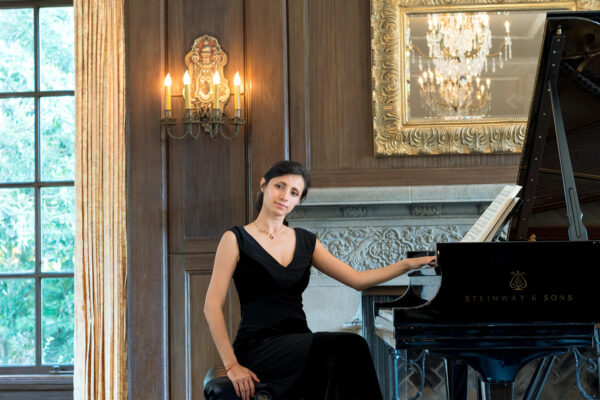
Siliana Chiliachka is a pianist and piano teacher whose approach is rooted in Dr. Edwin Gordon’s Music Learning Theory. Through listening, movement, singing, improvisation, and musical play, she helps children develop audiation—the ability to hear and understand music internally. Her goal is to help children move beyond simply playing the notes to become confident, independent musicians who think musically, play expressively, and experience genuine joy in making music.
Siliana offers online audiation piano instruction, with programs designed for families and small groups of students. Learn more about working with Siliana on her website or follow her on Instagram at @silianamusicstudio.