The Vital Place of Classical Music in Your Homeschool
If you know the importance of including classical music in your home education, but need direction — you’re in the right place. Exposure to classical music is one of the most important gifts you can give your child. Having been homeschooled all the way until I left for college, I have so much gratitude for my parents, who worked hard to enrich my life with a wide array of subjects. My thirst for the underlying order of the world was fed by science and math, for narrative meaning by history and literature, and for visual beauty by nature, ballet, museums, art, and design. But my thirst for the cosmic heart beneath it all was most deeply fed by classical music.

Within its rich tapestries of sound, I not only gazed at, read about, or understood what goodness, truth, and beauty was – I stepped inside it.
Classical music deeply forms the minds and hearts of our children, planting seeds of beauty that last a lifetime. It is vital, therefore, that we include it as an essential piece of their education.
But knowing how to teach classical music to children can feel overwhelming. Which composers and works are most appropriate for which ages? How do we teach our children to truly listen and engage with the masterworks? And if one does not have a background in music, is it still possible to cultivate a sharp ear and knowledge of the language of music?
(yes, it is – read on!)
In this guide, you’ll find: a 4-step method for cultivating deep appreciation of classical music in your home, 3 categories of classical music organized by aesthetic purpose, and age-specific listening recommendations from ages 3 through 18 – equipping you with clear, simple steps to teach classical music to your children.
How to Teach Classical Music to Children: A 4 Step Method
1. Simple Immersion: Fill Your Home with Classical Music
The first and most important step is simply to fill your home with it. Though your children may not yet know the stories of the composers or the exact music theory behind the works, they will absorb its beauty and be deeply formed by it, inhabiting the rich forms, structures, and harmonies.
How to do this:
Listen at home or on the road: Find a local classical radio station or journey through the classics through playlists on YouTube, Spotify or Apple Music. You can also use our free resource called 30 Days of Orchestral Masterpieces. Though it’s perfectly fine to play the works sometimes in the background, I highly recommend picking a time of day when you can play the works at high volume so your children can hear the full musical splendor.
Attend live classical music concerts: Commit to attending at least 1 concert, ballet, or opera per school term. Even if you don’t live in a city, you might be surprised to learn that your small town or a town nearby has a fully functioning orchestra, ballet, or opera house. Most mid to big cities do! Just Google your city + orchestra/ballet/opera and see what shows up. Seeing a performance live, enclosed in a concert hall with zero distractions where the sound waves can resound far and wide, is a thrilling experience. Though some children may be ready to attend earlier, most children begin to enjoy live orchestra concerts around age ten.
Take Music Lessons and Sing Often: Children will engage with music more fluently if they also “speak” the language themselves. Learning an instrument and singing often together as a family gives them an insider’s knowledge of the grammar, vocabulary, and expression of the universal language of music. Conversely, listening to classical music while taking lessons and singing as a family will sharpen their harmonic fluency. For tips on making practice joyful, see our guide How to Get Your Kids to Want to Practice Music.
2. Personal Connection
Facilitate an encounter with the masterpieces as pieces of art that speak to each person in a unique, powerful way. To do this, pick a movement from a larger work (such as a symphony or a sonata) or a short work (this can also be a movement from a larger work) and ask the child to journal or draw what they hear. This gives your child a purpose while listening, teaches them that music is capable of depicting images, storylines, or emotions, and, perhaps most importantly, it helps them engage with the masterpieces as living works of art.
How to do this: Facilitate by asking questions like: “What colors do you hear? What do you think is happening in the music? What words would you use to describe the music? How does it make you feel? Which instruments do you hear?” If you’d like a simple journaling and drawing printout you can use for this activity, you can download our free resource “My Classical Encounter.”
3. Rich Context
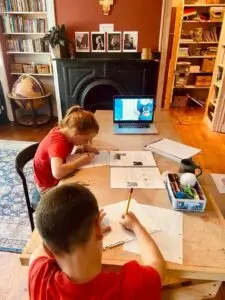 Pieces of music are never composed in a vacuum, but rather are expressions of the cultural worlds in which they were composed. To bring the masterworks even more fully to life, study what was happening in the particular time period and place in which it was written. When one learns, for instance, that the music of Haydn and Mozart was written during the Age of the Enlightenment, the purity of their musical forms, structures, and harmonies take on a whole new light, reflecting the logic, restraint, and individualism that toppled monarchies and steered the world towards a new era of democratic systems of government.
How to do this: Pick a composer from the same era and part of the world as the topics covered in your history studies. You can also do this with any subject. For instance, if you are studying the work of a particular artist, discover which composers were writing during the same period and immerse yourself in their music as you explore the artist’s creations. Pairing visual art and music from the same era can bring a historical period vividly to life. For example, the artwork of Michelangelo and the sacred music of Giovanni Pierluigi da Palestrina make a beautiful Renaissance pairing. If you want us to do the work for you, our curriculum The Story of Classical Music does just this – it invites students to experience the masterworks more vividly by first entering into the composers’ worlds through the artistic, cultural, historical, and philosophical events and works of their time. Each masterpiece of the classical canon thus comes to life as both a cultural synthesis of its own time and an artistic expression of transcendent beauty that crosses all borders of time and place.
4. Hear with Musician Ears
The final step is to step inside the music scores, identifying the unique musical techniques, instrumentation, and style of each composer and era. When encountering works of exquisite beauty, it is quite common to intuitively recognize that it is beautiful, but to not yet have the ability to articulate what makes it so. When we step inside the work with the aid of someone skilled in that particular art form, we can participate more fully, appreciating deeper layers of meaning unveiled within the work.
This is the hardest step to do alone, particularly if you don’t have a background in music – but it is also the step that transforms how you teach classical music to children. This is where our curricula can step in. Written for parents with or without a background in music, all of our curricula include listening activities that teach theory concepts and guide students to hear them in the particular work they are studying.
How to Select Classical Music for Children
A key part of learning how to teach classical music to children is knowing which works to choose. Stretching back nearly 1000 years, classical music encompasses a wide variety of sub genres and styles that have distinct aesthetic beauty and purpose, and it can be quite daunting to select which works to study or appreciate. To ease the overwhelm, I’ve divided the large oeuvre of the classical repertoire into three categories, organized by their primary aesthetic purpose. When organized in this way, it becomes easier to know which sorts of pieces to listen to during which times of day and for what aim. This list is certainly not comprehensive, but it is a good starting point for developing authority in selecting pieces for your homeschool. In the next section, I will break down the repertoire into further age appropriate categories, providing a list of pieces and composers most suitable to particular seasons of your child’s development.
3 Categories of Classical Music for Children (organized by aesthetic goal)
1. Music that Reflects the Beauty of the Cosmos
This music aims to reflect mathematical symmetries and perfected states of peace, harmony, logic, and clarity.
Benefit of this category: We inhabit perfected harmonic structures, textures, and patterns, thereby bringing more of those perfected states into our own lives, both interior and exterior.
Composers: Palestrina, Byrd, Tallis, Bach, Corelli, Handel, Vivaldi, Mozart, Haydn, and early Beethoven.
Specific Listening Recommendations:
- Palestrina: O Bone Jesu, Sicut Cervus
- Tallis: Spem in Alium
- Byrd: Ave Verum Corpus
- Bach: Brandenburg Concertos, Goldberg Variations, Cantatas (really anything and everything by the maestro of music)
- Corelli: Sonata da chiesa in F Major and Concerto Grosso in G minor
- Vivaldi: The Four Seasons
- Handel: Water Music
- Mozart: Symphony No. 40 in G minor
- Haydn: String Quartet in C Major Op. 20
- Beethoven: Violin Sonata No. 5
2. Music that Depicts, Paints, or Narrates
This music aims to bring to life particular ideas, images, or stories through vivid instrumentation.
Benefit of this category: We experience music as a powerful illustrative force, with the ability to awaken our imagination, taking us on exciting, cathartic journeys through stories and imagery.
Composers: Grieg, Tchaikovsky, Holst, Strauss (Richard, not Johann), Prokofiev, Wagner, and Respighi.
Specific Listening Recommendations:
- Grieg: Peer Gynt
- Tchaikovsky: Swan Lake, Sleeping Beauty and The Nutcracker (listening guide for Swan Lake and The Nutcracker)
- Holst: The Planets (listening guide for families)
- Strauss: Death and Transfiguration
- Prokofiev: Romeo and Juliet and the Cinderella Suite
- Wagner: Orchestral preludes and interludes from The Ring Cycle
- Respighi: Rome trilogy (Fountains, Pines and Festivals of Rome)
3. Music as Absolute Expression
This music does not limit itself to reflecting the perfect order of the cosmos, nor does it tie itself down to depicting a particular set of images, stories, or ideas. Its aim is to journey to a realm beyond words, expressing the universality of the human experience through limitless musical expression that takes shape within our hearts in distinctly personal ways.
Benefit of this category: Deeply expressive on both a personal and universal level, music of this category offers listeners the experience of journeying past the realm of visuals and words into the very heart of the human experience. Listening to this music has the effect of joining the listener’s particular joys, sufferings, and aspirations to the rest of humanity, thereby synthesizing the individual parts of our existence into magnificent wholes.
Composers: Beethoven, Rachmaninov, Brahms, Dvorak, Tchaikovsky, Mendelssohn, Shostakovich, Chopin, Liszt, Mahler, Prokofiev.
Specific listening recommendations:
- Beethoven: Symphony No. 5
- Brahms: Symphony No. 3 and Intermezzo in A Major, Op. 118 No. 2
- Rachmaninov: Piano Concerto No. 2
- Tchaikovsky: Pathétique Symphony
- Dvorak: Symphony No. 9
- Mendelssohn: Songs Without Words
- Shostakovich: Symphony No. 10
- Chopin: Ballade No. 1 in G Minor and Nocturne in C-Sharp Minor
- Mahler: Symphony No. 5
- Prokofiev: Piano Concerto No. 2
Age-Appropriate Classical Music for Children
When considering how to teach classical music to children of different ages, it helps to know that while all of the categories and works listed above are perfectly appropriate for all ages, there are specific works and composers that are most engaging for particular stages of development in your child’s life. Below are some pieces that work particularly well for four age ranges: Ages 3–7, Ages 8–11, Ages 12–15, and Ages 16+.
Classical Music for Children, Ages 3–7
This age range thrives on simplistic imagery or story association with music. There are several masterpiece educational works written for young ages that are beloved by both children and adults alike; You won’t tire of hearing the music, and you can rest assured you’re filling their ears with music of enduring beauty while teaching them musical instruments and simple musical terms! Here are four classics that should be a rite of passage for every child literate in classical music:
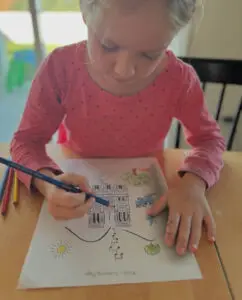
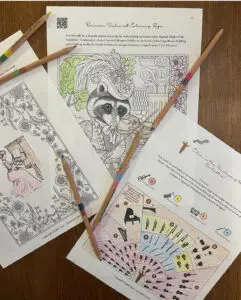
Carnival of the Animals by Saint-Saëns: A whimsical orchestral suite composed in 1886 as a lighthearted musical jest, in which each movement portrays a different animal through delightful orchestration. Though originally written as a playful joke, it has since become one of his most beloved works, loved by both adults and children alike. Pair it with the illustrated book Carnival of the Animals: Classical Music for Kids or coloring activities for a creative companion experience, and listen along with Leonard Bernstein’s narrated recording with the New York Philharmonic.
Peter and the Wolf by Sergei Prokofiev: A charming musical tale composed in 1936 to introduce children to the instruments of the orchestra, with each character represented by a distinct musical theme and instrument. Through its vivid storytelling and colorful orchestration, children follow Peter’s adventure while intuitively learning to recognize the distinct timbres of each instrument of the orchestra. Listen to Leonard Bernstein’s beloved narrated recording with the New York Philharmonic for the perfect introduction.
Flight of the Bumblebee by Rimsky-Korsakov: Taken from the orchestral interlude from his opera The Tale of Tsar Saltan (1899), its famously rapid, whirring passagework captures the frenetic motion of a bumblebee in flight, showcasing both virtuosic brilliance and imaginative tone painting.
Suggested activity: Keep the title a secret and ask them to listen closely to figure out what sort of creature the music is about. Then, after hearing their ideas, reveal the title and listen again! Make sure to delight in hearing both their ideas and the original inspiration behind the music. You can explain to them that one of music’s most powerful traits is that it can become something different in the minds of each listener!
In the Hall of the Mountain King by Grieg: Composed in 1875 as part of his incidental music for the play Peer Gynt, this piece offers a highly exciting experience with music’s ability to build speed, volume and narrative momentum. It depicts Peer’s perilous encounter in the mountain king’s hall, culminating in a thrilling, frenzied climax when he escapes.
Suggested activity: Ask them to imagine they are escaping from the scary troll king in the middle of the night! They must walk very lightly, so as not to wake him up. Have them walk to the beat quietly, then gradually walk faster as the tempo increases and the troll wakes up and tries to catch Peer Gynt! This activity helps the child learn how to keep a steady beat and how to listen for variances in tempo and dynamics.
If you want open-and-go activities to do with your child for this category, our Storytelling through Music guide is excellent for this age range.
Classical Music for Children, Ages 8–11
 This age delights in hearing more powerful, complex storytelling that whisks them away to the far off lands and plot lines of fairytales and adventure stories. Below are a few storytelling classics by composers known for their passionate, deeply imaginative orchestrations. These works can be played while on the road or while doing household chores like cleaning and cooking, providing narrative musical enrichment while doing the mundane.
The Planets by Gustav Holst: A sweeping, seven-movement orchestral suite composed between 1914 and 1916, in which each movement evokes the character of a planet as interpreted through Roman mythology and astrology. Through bold, imaginative orchestration, children journey into space and experience the distinct character of each planet, from the heart pounding militant rhythms of Mars to the radiant warmth of Jupiter. (Listening Guide for families)
Tchaikovsky’s ballets: Tchaikovsky is rightfully known as the king of ballet music, composing scores that transport us to enchanted landscapes with soaring, deeply expressive melodies, perfectly suited for exhibiting the human form in its most refined, graceful state. And yet his ballet scores are just as compelling on their own terms: Marvelously imaginative, evocative, and utterly gorgeous works that children and adults alike love, his three ballets Swan Lake (1875–76), Sleeping Beauty (1889), and The Nutcracker (1892) are all beloved masterpieces.
Tip: Listening to the entire ballet scores can be quite lengthy, so instead you can listen to the “suite” version of these works, which condense the most popular movements into a shorter, more manageable length experience of the work.
If you would like guided listening activities, we have Listening Guides with activities that engage all the ages in your home for The Nutcracker and Swan Lake.
Peer Gynt by Edvard Grieg: Grieg’s incidental music for Henrik Ibsen’s dramatic poem (1875) follows Peer’s fantastical journey through whimsical, imaginative orchestration. From the serene beauty of Morning Mood to the mounting intensity of In the Hall of the Mountain King, children will delight in following the story’s vivid imagery while also creating their own narratives to accompany each distinct mood.
Firebird Suite by Stravinsky: Stravinsky’s dazzling ballet score, composed in 1910 for the Ballets Russes, follows a magical tale of a radiant firebird, a heroic prince, and a dark sorcerer, brought vividly to life through shimmering, imaginative orchestration. From the eerie, shadowed opening to the brilliant sweep of the final triumph, the music is richly enchanted, building towards one of the most thrilling musical climaxes in the repertoire.
Classical Music for Teens, Ages 12–15
 As children go through hormonal and developmental changes, they experience new emotions that can be difficult to process and articulate. Choosing music that is deeply expressive and evocative without being tied to a particular story line helps music become a powerful outlet for them. Generally the Romantic era of music (roughly 1800–1910), with its focus on expressing the emotional arc of the individual, is most ideal for this age.
A great way to put this into practice is to have your child keep a music journal where they record their thoughts as they listen. This could be done weekly or daily, depending on how much your child enjoys the activity. Simply pick one work for them to encounter intentionally.
The important thing is to give them utmost freedom to write down thoughts that spring forth naturally. Sometimes music prompts us to work through or express thoughts, emotions, or memories that have nothing to do with the particular musical work, but which somehow the language of music accessed. Whether they are writing about the particular music they are listening to, or the music is a springboard for other thoughts or creative writing – either way, it is a highly valuable activity that develops emotional maturity and musical literacy.
There is an abundance of great pieces for this category, but here are a few that immediately come to mind as particularly beloved for this age:
- Rachmaninov: Piano Concerto No. 2
- Rachmaninov: Variations on a Theme by Paganini
- Debussy: La Mer
- Chopin: Nocturnes
- Beethoven: Symphony No. 6, Symphony No. 7, Moonlight Sonata, Pathétique Sonata
- Tchaikovsky: Piano Concerto No. 1, Violin Concerto
- Grieg: Piano Concerto
Classical Music for Young Adults, Ages 16–18
As children enter adulthood, they are drawn to works of more nuance and restraint: Music that balances emotion with logic, sumptuous poetry with graceful lightness, deep feeling molded by clear structures and forms. In addition, they are now capable of engaging with more complex musical works that can be overwhelming and incomprehensible to younger ages. Below are some composer recommendations – anything and everything written by the following composers will be potent, age appropriate, and deeply impactful.
“The Three Great Bs” (Bach, Beethoven, and Brahms): You can’t go wrong with these three B giants – literally everything they wrote is great. If you would like some kind of systematic way of progressing through them, you can make your way through the sub genres, one at a time:
- For Bach: Sacred music (cantatas, passions, oratorios, Mass in B Minor); Keyboard Music (Preludes and fugues, French Suites, English Suites, Partitas, Inventions and Sinfonias, Toccatas); Orchestral music (Brandenburg Concerti, Orchestral Suites, Violin concerti); Chamber music (Sonatas for violin, flute, viola da gamba, etc., trio sonatas); Solo instrumental music (Cello Suites, Sonatas and Partitas for solo violin).
- For Beethoven & Brahms: Symphonies, string quartets, piano trios, piano quartets, violin sonatas, piano sonatas, cello sonatas, and concerti.
Shostakovich: A composer who wrote during the Soviet regime, his music is gnarly, ironic, and often ridden with anxiety and urgency. Yet amidst all of this is a powerful testament to the enduring resilience of the human spirit. This music is highly important for your child to experience as they enter an age in which they are acutely aware of the weight of the world and are experiencing their own doubts and fears. His fifteen symphonies are all masterpieces, his Piano Concerto No. 2 contains one of the most transcendent moments of beauty in all of piano concerto repertoire, and his cello sonata offers a powerful, introspective look at an artist’s life within Soviet Russia.
Mahler: A composer who wrote mammoth symphonies that each aimed to contain the entire world, his music is nothing short of ambitious, and yet somehow it delivers at a magisterial level. His nine symphonies are all masterpieces, but I recommend starting with the 5th.
Prokofiev: Prokofiev’s music is both meticulously ordered and ecstatically grandiose, with searing virtuosity driven by thunderous rhythmic power. Blast his piano concerti and symphonies for a thrilling, awe-inspiring ride.
If you’ve read to the end, you are clearly a parent who cares deeply about cultivating the good, the true and the beautiful in your child’s life through the particularly powerful medium of classical music, and for that, I salute you! Now that you know how to teach classical music to children, you are ready to give your child exposure to music that will form them, uplift them, and ultimately steer them towards a lifetime of knowing, appreciating, and inhabiting the beautiful tapestry of our existence.
Ready to get started? Explore our membership plans or browse our shop for listening guides, journals, and curricula you can use today.
Cheers,
Sadie Hoyt